Rusticx
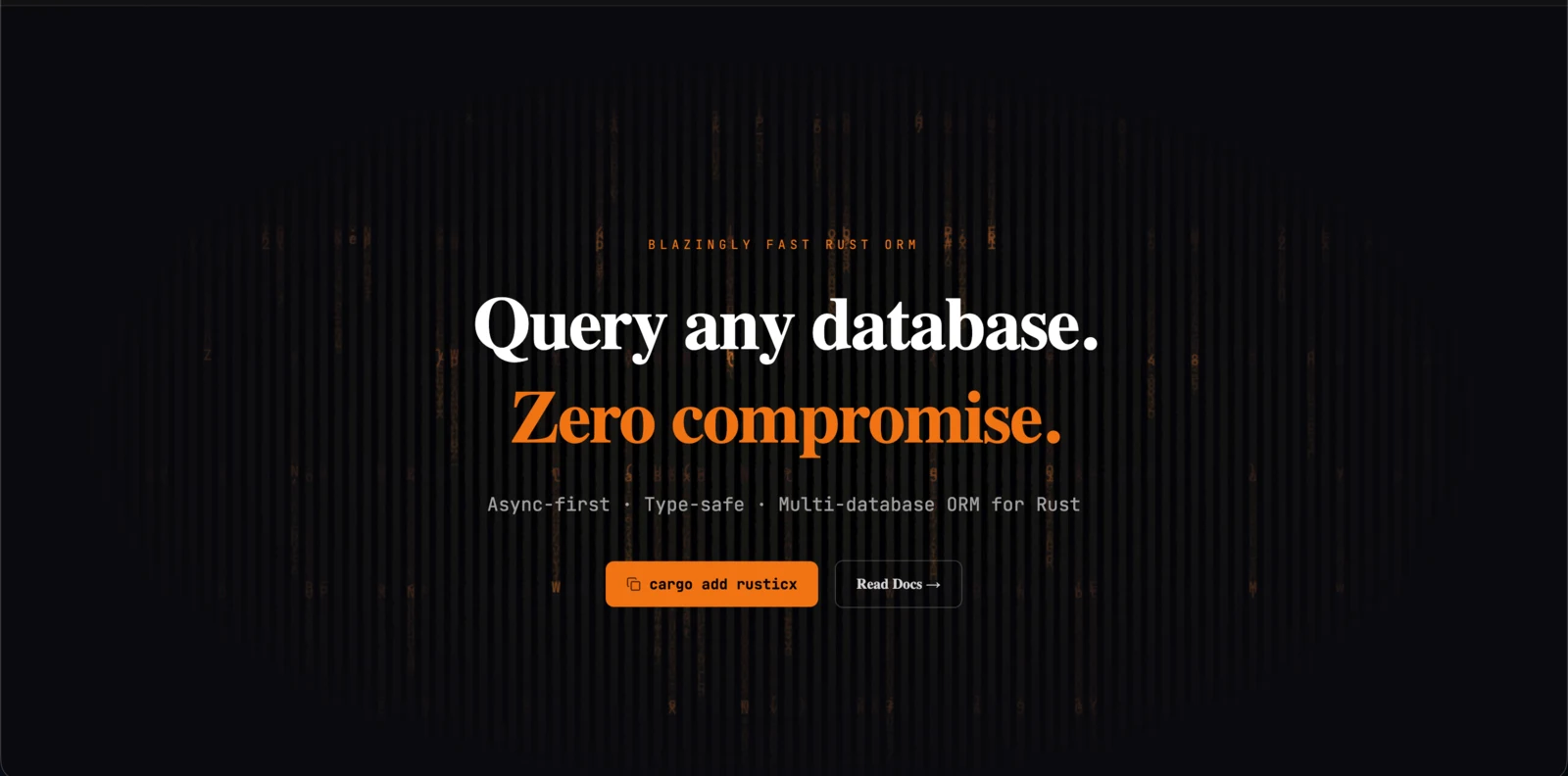
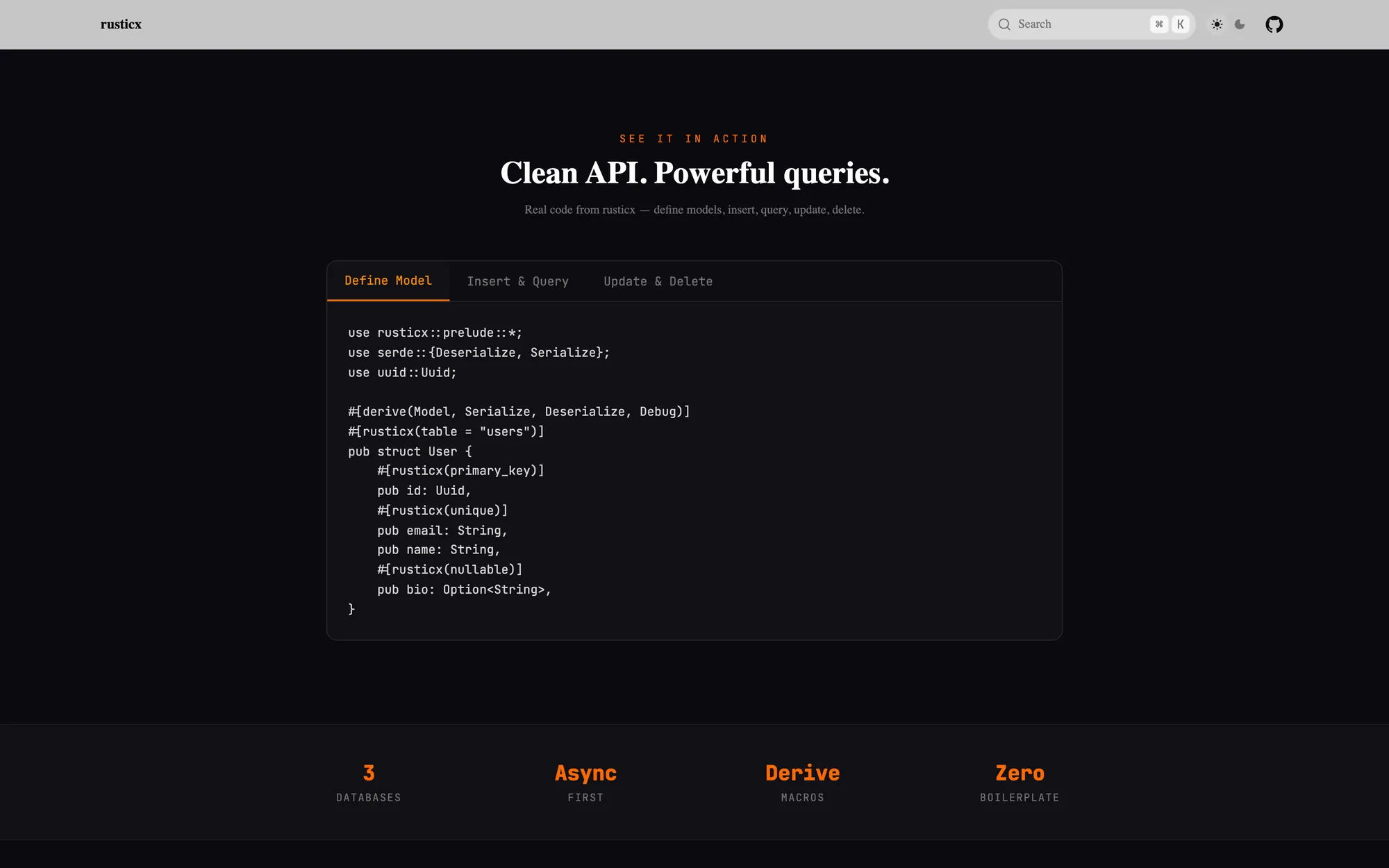
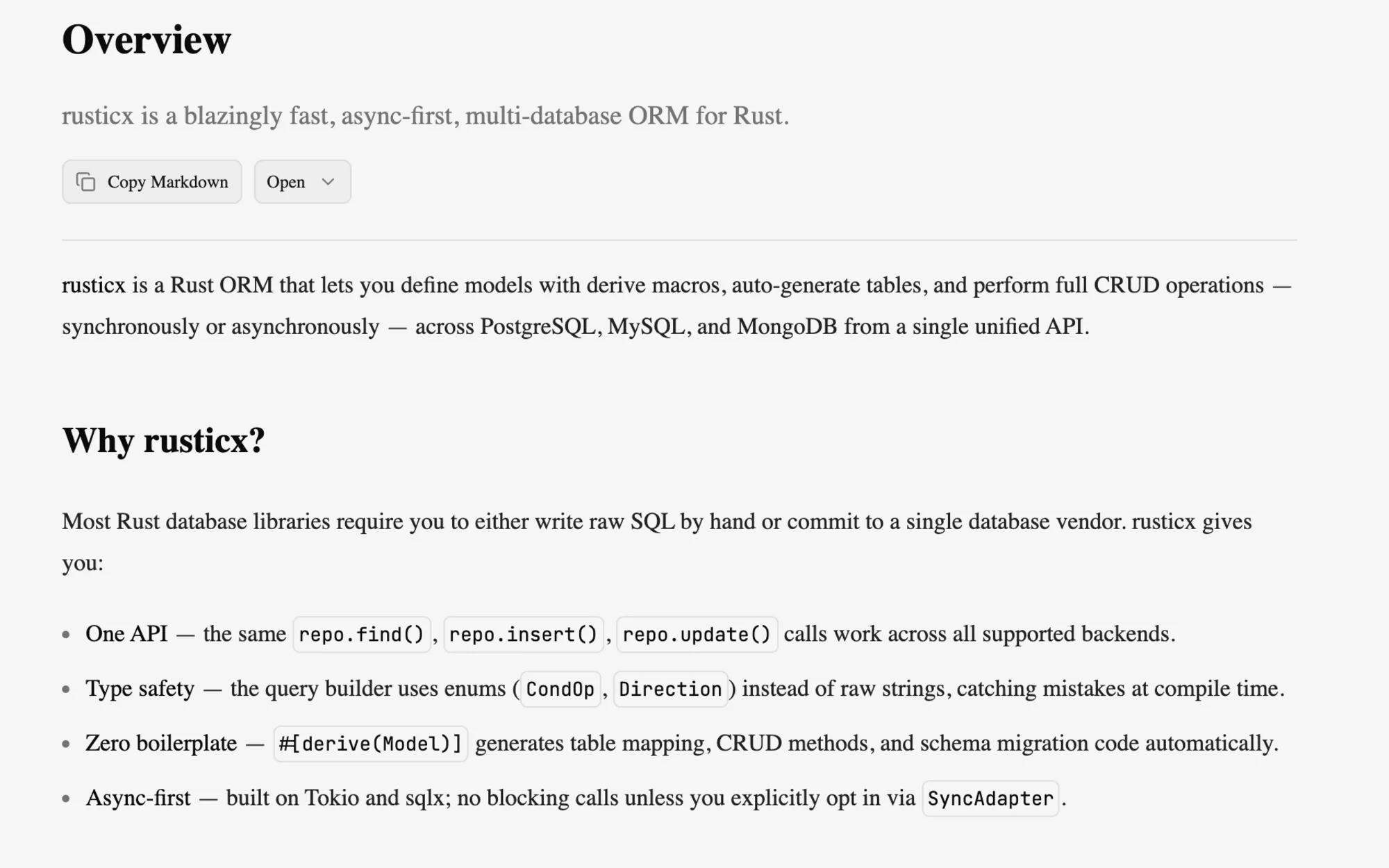
Define a model with a derive macro, generate its table, and run full CRUD across PostgreSQL, MySQL/MariaDB and MongoDB from one API, asynchronously or not.
How it’s built
- rusticx
- The public facade. Backends are feature-gated, so a project compiles only the databases it uses.
- rusticx-core
- The Model trait, Repository, QueryBuilder, Value and the DatabaseAdapter every backend implements.
- rusticx-macros
- The #[derive(Model)] procedural macro that generates the boilerplate from a struct.
- rusticx-sql
- A SQL dialect compiler producing DDL and DML for PostgreSQL and MySQL.
- rusticx-postgres, rusticx-mysql
- SQL adapters on sqlx, with its connection pool.
- rusticx-mongo
- The MongoDB adapter on the official async driver, with its native pool.
What it does
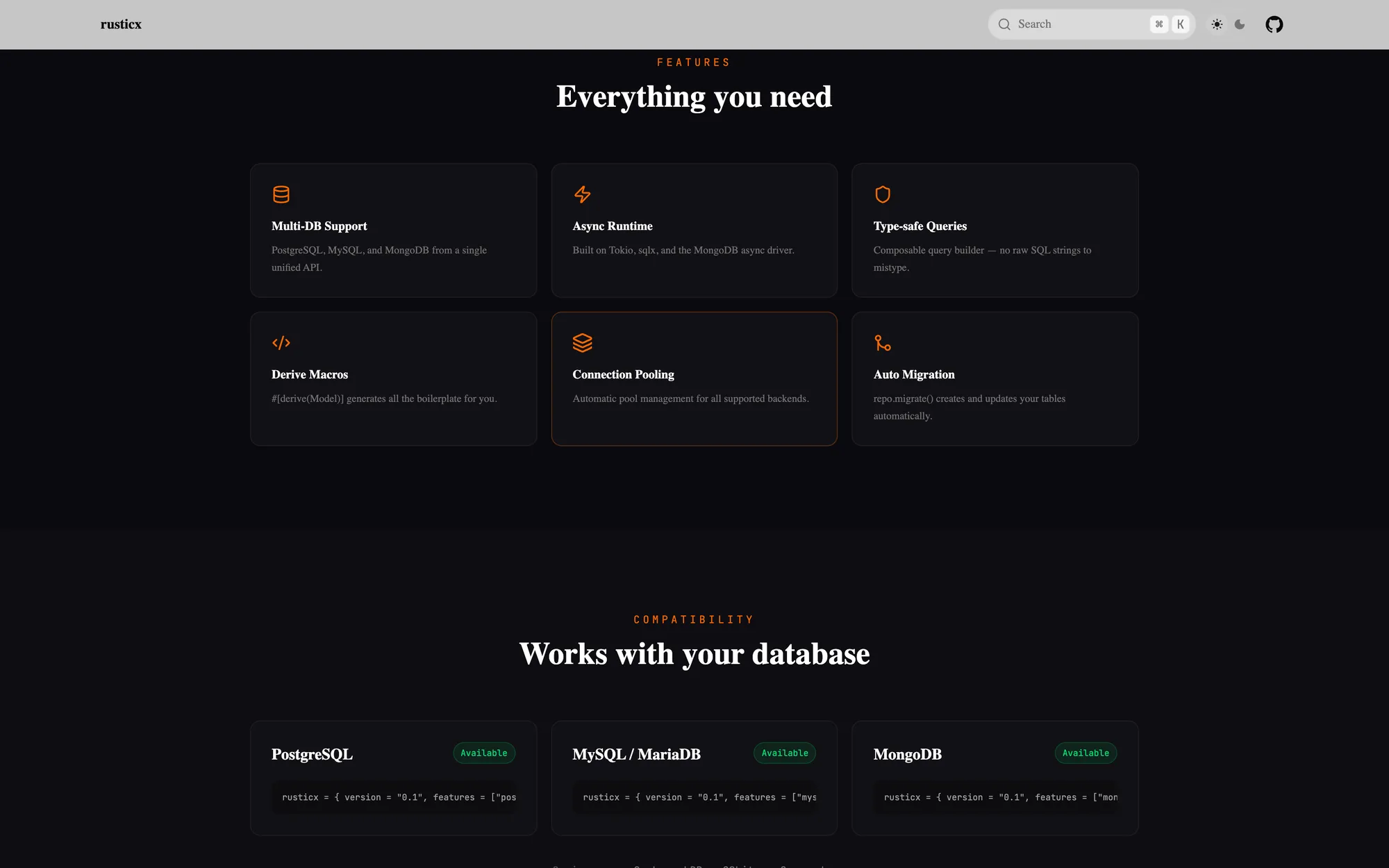
- Async-first on Tokio, sqlx and the MongoDB async driver, with a SyncAdapter wrapper for blocking contexts.
- A type-safe, composable query builder: equality, comparison, LIKE and ILIKE, null checks, OR groups, ordering, limit and offset, without raw strings for common queries.
- Repository methods for insert, insert_many, find_by_id, find, find_one, paginate, count, update, save (insert-or-update) and delete, plus raw SQL when it is needed.
- Field attributes for table names, primary keys, nullability, uniqueness, defaults, column renames and skipped fields.
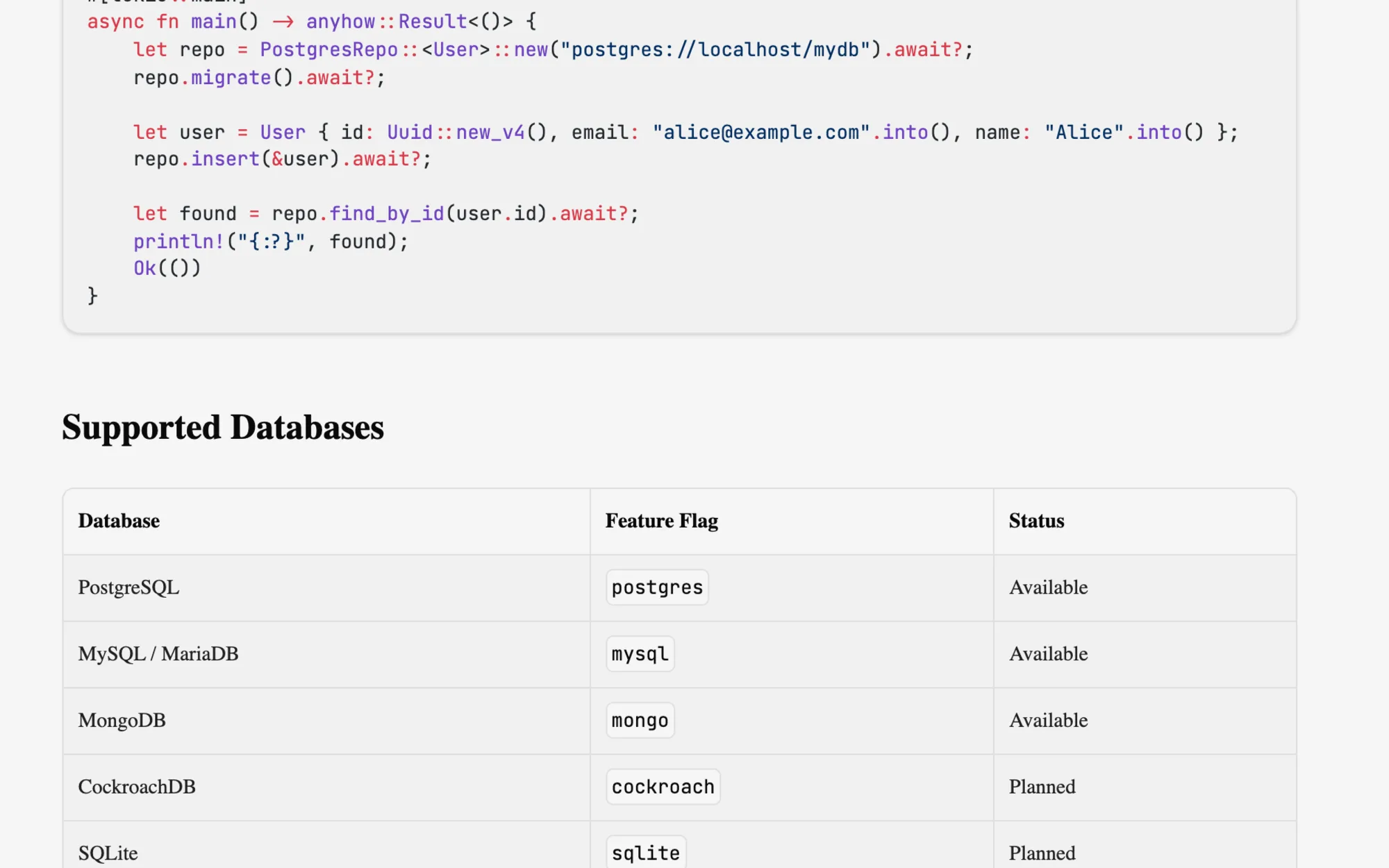
- migrate() creates a model's table if it does not exist.
Screens
Where it sits
Rust · Tokio · sqlx 0.8 · mongodb 3 · syn / quote (proc macros) · serde · thiserror · tracing
By the numbers
- Workspace crates
- 7, all published at 1.0.0
- Stable databases
- PostgreSQL, MySQL, MariaDB, MongoDB
- Planned
- CockroachDB, Cassandra, SQLite
Get it
- crates.io (opens in a new tab)
cargo add rusticx - API docs (opens in a new tab)